|
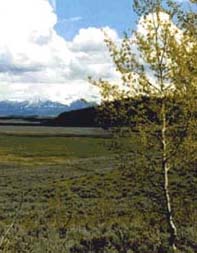
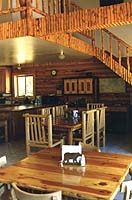
‘Reflections,’ taken at the Flying A Guest Ranch by Joanne Panizzera, was the 1dst Place winner in USA Today’s ‘Picture America’ national photo contest.
|
Pinedale Roundup stories – July 3, 2009 (posted 7/3/09)
Award-Winning Photo Taken In Pinedale Town construction back in full swing McDonald’s rep scouts Pinedale Obituary - William G. McQuillan Obituary - Robert Wayne Routh
Update on I-80 tolling question (posted 7/3/09) Looking for ways to pay for road maintenance Wyoming Department of Transportation
Study related to the concept of instituting a toll on Interstate 80 across southern Wyoming continues this month, and WYDOT has scheduled additional open house-public meetings for Casper and Gillette. The meetings are part of an ongoing public education and involvement effort associated with the study.
Five similar events were conducted last month in communities (Cheyenne, Laramie, Rawlins, Rock Springs and Evanston) along the I-80 corridor. The upcoming open houses are set for Wednesday, July 15, at the Parkway Plaza in Casper and Thursday, July 16, at the Best Western Towers West in Gillette. Both meetings begin at 5 p.m. "During the interactions we’ve had with the public meetings so far, we’ve received a range of reaction to the concept of tolling on I-80," Pat Collins, WYDOT assistant chief engineer for engineering, said. "Understandably, there’s a lot of concern and also, some misconceptions about the tolling concept."
"A key point is that as of today, there is no plan or proposal for tolling. It is simply one of a number of possible ways that legislators can consider as a means of addressing the growing needs of maintaining I-80 into the future," Collins added.
During the next three decades, I-80 traffic is expected to more than double from the current average of 13,000 vehicles per day. Large truck traffic, which now makes up about half of I-80 usage, is expected to increase at a faster pace than passenger vehicle traffic. Meanwhile, estimates show WYDOT will need $6.4 billion, after adjusting for inflation, during that time frame to simply maintain I-80 in its present condition, exclusive of adding capacity to meet traffic growth. The $6.4-billion cost estimate exceeds the total of revenue expected to be available for maintenance of the entire state highway system, much less I-80.
"We are most interested in receiving constructive comment about how to best address our anticipated I-80 funding challenges, whether it’s tolling or another method. We appreciate that our legislators will have difficult choices ahead of them in providing adequate funding to keep up with demands," Collins said.
Research into the possible tolling of I-80 began last year following authorization by the Legislature's Joint Transportation, Highways and Military Affairs Interim Committee. The initial phase of work concluded last fall with the issuance of a feasibility study by consultant firm PB Americas.
Earlier this year, the full Legislature enacted a measure (Enrolled Act No. 111), requiring additional study to build on the findings of last year's I-80 tolling feasibility report. One of the focal points is the possible expansion of I-80 to three lanes in each direction to meet the future needs.
Comment forms will be provided at the upcoming meetings in Casper and Gillette. Those unable to attend but wishing to comment may do so by submitting their comments to Tim McDowell, State Programming Engineer, WYDOT, 5300 Bishop Blvd., Cheyenne, WY 82009, or via email to: tollingstudy@dot.state.wy.us.
Detailed information about the I-80 Tolling Study, as well as an I-80 usage survey, is available on WYDOT’s Web site (www.dot.state.wy.us/wydot/planning_projects/studies_plans/I-80_tolling_study).
75th Annual Chuckwagon Days July 3 & 4, 2009 (posted 7/2/09)
Big Piney Chuckwagon Days are always held over the 4th of July in Big Piney and Marbleton. The celebration includes an early-morning walk/run, a parade down main street in Big Piney, a free BBQ cookout, a Lil' Buckaroo Rodeo for youngsters up to age 12, WRA-IMPRA rodeo, a street dance, and fireworks on July 4th.
FRIDAY, JULY 3RD 6:00 PM – Lil' Buckaroo Rodeo For ALL kids 12 and under. Starts at 6:00 PM at the Sublette County Fairgrounds. Free! Sponsored entirely by EnCana Oil & Gas (USA)
Stickhorse Barrel Racing (ages 4 & Under, 5-7, 8-9) Goat Tail Tying (ages 5-7, 8-10, 11-13) Calf Roping (ages 7-9, 10-13) Mutton Busting (ages 6 & under) Bareback Riding (ages 7-9, 10-13) Calf Riding (ages 7-9)
SATURDAY, JULY 4TH
8:00 AM: Chuckwagon Chug 5K and 10K Walk/Run Before the Big Piney parade. Entry fee. Start & finish at the Big Piney High School parking lot. For more information or to pre-register, contact Gudrid Espenscheid, 307-276-5441. (Editor's Note: We have not confirmed this event taking place for 2009. We have been unable to contact the organizers to confirm this Walk/Run for this year.)
8:30 AM: Parade Line-up at EOG Resources 9:15 AM: Parade Judging
10:00 AM: Chuckwagon Days Parade, down Budd Avenue in Big Piney Contact the Town of Big Piney Town Hall for parade and entry info, 307-276-3554.
After Parade: Chuckwagon Days BBQ At the Sublette County Fairgrounds. FREE! (Donations accepted) Everyone welcome.
1:00 PM: Chuckwagon Days Rodeo Co-Approved IMPRA and WRA Bull riding Saddle bronc Bareback riding Team roping Steer wrestling Tie-down roping Barrel racing Breakaway roping Junior barrels Calf scramble Concessions will be available. Admission $5.00/person, kids 12 & under free.
8:00 PM: Street Dance On Fish Street in Big Piney. Free! Families encouraged. Town will provide soft drinks and water. DJ will play music for dancing.
Dusk: 4th of July Fireworks Shot from the Marbleton Hill
For more information see: www.ChuckwagonDays.com
BLM designates public lands for Solar Farms (posted 7/2/09) 24 tracts in six states designated as prime zones for utility-scale solar energy development Bureau of Land Management
Secretary Salazar, Senator Reid Announce 'Fast-Track' Initiatives for Solar Energy Development on Western Lands
LAS VEGAS, Nevada – Under initiatives announced today (June 29, 2009) by Secretary of the Interior Ken Salazar and U.S. Senator Harry Reid (D-NV), federal agencies will work with western leaders to designate tracts of U.S. public lands in the West as prime zones for utility-scale solar energy development, fund environmental studies, open new solar energy permitting offices and speed reviews of industry proposals.
"President Obama’s comprehensive energy strategy calls for rapid development of renewable energy, especially on America’s public lands," said Secretary Salazar. "This environmentally-sensitive plan will identify appropriate Interior-managed lands that have excellent solar energy potential and limited conflicts with wildlife, other natural resources or land users. The two dozen areas we are evaluating could generate nearly 100,000 megawatts of solar electricity. With coordinated environmental studies, good land-use planning and zoning and priority processing, we can accelerate responsible solar energy production that will help build a clean-energy economy for the 21st century." "I want to thank Secretary Salazar for his commitment to renewable energy, and for being here in Nevada today," said Reid. "This is the Secretary's second visit to Nevada to announce key renewable energy initiatives that will help make Nevada the blueprint for everything that’s right about the future of our nation’s energy policy. We’ve got sunny skies, strong winds, and land that when used properly, will allow us to lead the nation’s children into a cleaner, more efficient, and more profitable tomorrow." Under one initiative, 24 tracts of Bureau of Land Management-administered land located in six western states, known as Solar Energy Study Areas, would be fully evaluated for their environmental and resource suitability for large-scale solar energy production. The objective is to provide landscape-scale planning and zoning for solar projects on BLM lands in the West, allowing a more efficient process for permitting and siting responsible solar development. Those areas selected would be available for projects capable of producing 10 or more megawatts of electricity for distribution to customers through the transmission grid system. Companies that propose projects on that scale in areas already approved for this type of development would be eligible for priority processing. The BLM may also decide to use alternative competitive or non-competitive procedures in processing new solar applications for these areas. Secretary Salazar and Senator Reid also announced the opening of a new Interior renewable energy coordination office (RECO) in Nevada, the first of four, with the others located inArizona, California, and Wyoming. The offices will help to expedite processing of the increased number of applications for renewable energy projects on U.S. lands. Currently BLM has received about 470 renewable energy project applications. Those include 158 active solar applications, covering 1.8 million acres, with a projected capacity to generate 97,000 megawatts of electricity. That’s enough to power 29 million homes, the equivalent of 29 percent of the nation’s household electrical consumption. The BLM will continue to process existing renewable energy applications, both within and outside of the solar energy study areas. Interior also is coordinating with states to expedite permitting for a number of solar power projects nearing approval. The BLM will begin site-specific environmental reviews for two major projects in Nevada that would have a combine capacity of more than 400 megawatts of electricity: the NextLight Silver State South array is planned to produce 267 megawatts; and the NextLight Silver State North would produce about 140 megawatts. Interior continues to work with the Western Governors Association to develop renewable energy zones and transmission corridors. The Solar Energy Study Areas, located in Nevada, Arizona, California, Colorado, New Mexico and Utah and outlined in maps to be published in the Federal Register Tuesday, encompass about 670,000 acres. Only lands with excellent solar resources, suitable slope, proximity to roads and transmission lines or designated corridors, and containing at least 2,000 acres of BLM-administered public lands were considered for solar energy study areas. Sensitive lands, wilderness and other high-conservation-value lands as well as lands with conflicting uses were excluded. As part of this initiative, the BLM will segregate the study areas from new mining claims and other actions initiated by third parties under public land laws. This temporary 2-year segregation will give BLM time to complete its environmental review and make a determination on solar energy zones. It will not affect rights established prior to the temporary segregation. The public will have the opportunity to comment on these proposed solar energy study areas during the environmental reviews before any final decisions are made. The evaluation is expected to be completed in late 2010. An ongoing federally-funded environmental evaluation of potential solar energy development on public lands in 6 Western States, known as the Solar Programmatic Environmental Impact Statement, or PEIS, will be expanded to include an in-depth analysis of the potential impacts of utility-scale solar energy development on public lands in the 24 Solar Energy Study Areas. This enhancement will be supported by additional federal funding under the American Recovery and Reinvestment Act. The BLM will continue to process the 158 active solar applications during preparation of the PEIS. The bureau will also continue to accept new applications both within and outside of the Solar Energy Study Areas. However, these applications will be subject to any decisions made from the Solar PEIS. This expanded evaluation, a collaborative effort with the Department of Energy, will allow the Bureau of Land Management to take a close look at each study area to determine where it makes sense to develop large-scale solar projects in an environmentally responsible way. Companies proposing solar energy projects in designated areas would be able to "tier" to this study, using it as part of their environmental impact studies for site-specific projects, which are required by the National Environmental Policy Act. Additional information on the BLM’s renewable energy program is available at www.blm.gov.
Related Links: Links to solar energy study areas in six states Maps of proposed solar farm locations on BLM-administered lands in Arizona, California, Colorado, Nevada, New Mexico, Utah treehugger.com Powering 20,000 Homes: The World's Largest PV Solar Farm Opens See photos of 247-acre solar farm in Spain (February, 2008)
Two Youths Overcome by Carbon Monoxide (posted 7/2/09) Carbon-monoxide concentrations released from boats can be over 150 times higher than exhaust from an ordinary automobile
Two nine-year-old girls from Jackson, Wyoming families suffered carbon-monoxide poisoning while "teak surfing" behind an inboard ski boat on Jackson Lake on Tuesday afternoon, June 30. Teton Interagency Dispatch Center received a 911 call regarding the situation about 4:30 p.m. and park emergency medical providers, along with numerous park personnel from other divisions, responded immediately to the Colter Bay Marina to provide life-saving medical care before transporting the young girls to St. John’s Medical Center. After receiving highly concentrated oxygen treatment, the girls were revived and later released from the hospital.
A family of four (mom, dad, son and daughter), along with a young girl and her brother from another family, were out for an afternoon excursion on the lake. The young girls, and their older brothers, were taking turns holding onto a swim platform attached to the back of a 20-foot, 1994 Tige ski boat while being pulled across the water. Because of the close proximity to the boat’s exhaust ports, the two girls and one of the boys were subjected to a high concentration of carbon-monoxide gas. When both girls lost consciousness and slumped down behind the platform, one of the brothers realized something was wrong and quickly pulled them out of the water and onto the platform. The young man also made an emergency call for help on his cell phone. Although the father was operating the ski boat when the girls lost consciousness, his son took over in order to drive to the marina to get emergency care. During this time, the father gave CPR to one of the girls.
An investigation is underway regarding the circumstances of this incident and a citation for operating a vessel while allowing a person to hang onto a swim platform will likely be issued, as well as a citation for failure to provide required personal floatation devices for all boat occupants. Because of its inherently unsafe nature, "teak surfing" is illegal in all national park units—including Grand Teton; it is also illegal in a number of states.
The activity is called "teak surfing" because the swim platforms on boats are often made of teak wood. Swimmers use these transom platforms to body surf on the wake behind a slow moving boat; however the inboard-motor exhaust ports place the swimmers in direct contact with carbon-monoxide gases, leading to potentially deadly exposure. High concentrations of carbon monoxide can cause a rapid loss of consciousness and death. Levels of carbon-monoxide are more dangerous in the boating environment because they can lead to drowning. In addition, carbon-monoxide concentrations released from boats can be over 150 times higher than exhaust from an ordinary automobile.
Carbon monoxide—an odorless, colorless, and tasteless gas—is a leading cause of accidental poisoning deaths each year in the United States. According to the Centers for Disease Control, approximately 500 people perish annually due to carbon-monoxide poisoning. Symptoms of carbon-monoxide poisoning may include severe headache, dizziness, confusion, nausea, fainting, and death. Low levels can cause shortness of breath, slight nausea, and a mild headache.
"This incident serves as a harsh lesson that a seemingly innocent activity can actually be quite dangerous," said Superintendent Mary Gibson Scott. "We are so relieved that these two young ladies were revived, and that this incident had a positive ending for the families involved."
Related Links: Grand Teton National Park
Off-Road Vehicle parking areas at Greys River campgrounds (posted 7/1/09) Bridger-Teton National Forest
District Ranger Jay Dunbar announces that recreation staff on the Greys River Ranger District of the Bridger-Teton National Forest is creating off-road vehicle (ORV) parking areas outside campground perimeter fences. The parking areas are an attempt to limit dust, noise and safety concerns in the District’s developed campgrounds.
Many campers choose to stay in dispersed sites outside the fee campgrounds and often drive their ORVs along District roads. Along the way, they may stop at the fee campgrounds to use the toilets or fill up a water bottle. Many off-road vehicles are small, and extremely difficult to see from large recreational campers or pickup trucks towing campers, creating a serious safety concern within the confined roads in the developed campgrounds.
Signs will be placed along the outside perimeters of the campgrounds designating areas where visitors can park their ORVs or trailers. Dispersed campers are still welcome to walk into the campgrounds to use the toilets and get water. Campers in the fee campgrounds will still be able to park a trailer with ORVs within the campground as well, on a limited basis. Sites are designed for one towing vehicle and one trailer, which could be a truck with ORV trailer and space for setting up a tent. A self-contained camper towing an ORV trailer could also meet the space limitations. Alternatively, campers using a truck and recreational camp trailer may park their ORV trailer in an empty site within the campground, but must pay the camp fee for that additional site.
Campgrounds where the parking areas will be designated include Forest Park, Moose Flat, Murphy, Swift Creek and Allred Flats. Cottonwood Lake ORV trailer parking will be provided at the lakeside day-use area. Off-road vehicles are still allowed within Cottonwood Campground in order to access the motorized trailhead on the northeast corner of the campground. Signs will direct motorized recreationists to the east loop, leaving the west loop of that campground, where corrals are provided, for horse-based recreationists.
Ignition interlocks law goes into effect July 1, 2009 (posted 7/1/09) Mandatory for many drivers convicted of drunken driving
A new law will make ignition interlock devices mandatory for many drivers convicted of drunken driving in Wyoming beginning July 1.
Ignition interlocks prevent a vehicle from starting unless the driver first passes a breath test. The 2009 Legislature made the devices mandatory for six months for anyone convicted of a first driving under the influence offense in which their blood alcohol content is .15 percent or greater. A BAC of .08 is considered drunk under Wyoming law.
Conviction on a second DUI offense at any BAC level will make the device mandatory for a year, and a third offense will bring a two-year requirement.
A fourth conviction carries a lifetime ignition interlock requirement, but the driver is allowed to petition the court to have the device removed after five years. Wyoming began a voluntary ignition interlock program in 2006 that has resulted in about 520 drivers having the monitoring devices installed on their vehicles.
The new mandatory ignition interlock law could result in a 10-fold increase in the number of devices on Wyoming vehicles.
"If you look at current statistics, the number of people convicted of DUI where their BAC is over .15 or of second, third and fourth offenses in Wyoming could very easily be close to 5,000 mandatory ignition interlock drivers in a year to a year and a half," WYDOT Support Services Administrator Tom Loftin said.
Another new law taking effect July 1 creates an administrative process for suspending the driver license of anyone with unpaid child support in excess of $5,000 who hasn’t made any payment in 90 days or more.
In the past it was up to the parent with custody to get a court order to suspend the other parent’s license. Because of the time and expense involved in the court process, the department received only a few of those suspension orders in recent years. The new administrative procedure gives the debtor parent the option of appealing the suspension in court.
"With this new approach, we’re just not sure exactly how many people it’s going to affect, but there are several thousand in the state who essentially meet this basic criteria of owing more than $5,000 and not making any payment for 90 days," Loftin said.
Also beginning July1, the potential fine for commercial trucks traveling more than 5 mph above the speed limit will increase to $300 from the current $100.
"I do hope this provides a deterrent for the drivers of those types of vehicles to say, ‘In Wyoming we need to pay attention to our speed,’" Patrol Col. Sam Powell said. "If we end up not writing a single ticket for this because all the commercial vehicles are traveling at a safe speed then the law has done what we hoped it would do."
The higher fine only applies to large commercial trucks, not delivery vans, recreational vehicles or pickups pulling trailers. The large trucks can weigh 80,000 pounds or more and can’t stop or maneuver as quickly as other vehicles on the highways. "We need to do everything we can to impress upon the drivers of these vehicles that they need to hold their speed down to the legal limit and keep it safe for everybody out there," Powell said.
DJ Tabler (left) fires off his rocket with the help of instructor Matthew Shafer. Photo by Pam McCulloch.
|
Sublette Examiner stories – June 30, 2009 (posted 6/30/09)
3…2…1…Blast off! Shootout could make comeback at Rendezvous Fourth is a dangerous driving holiday Ultra cited for air-quality violations Public Notices
|
Business
Directory
|